
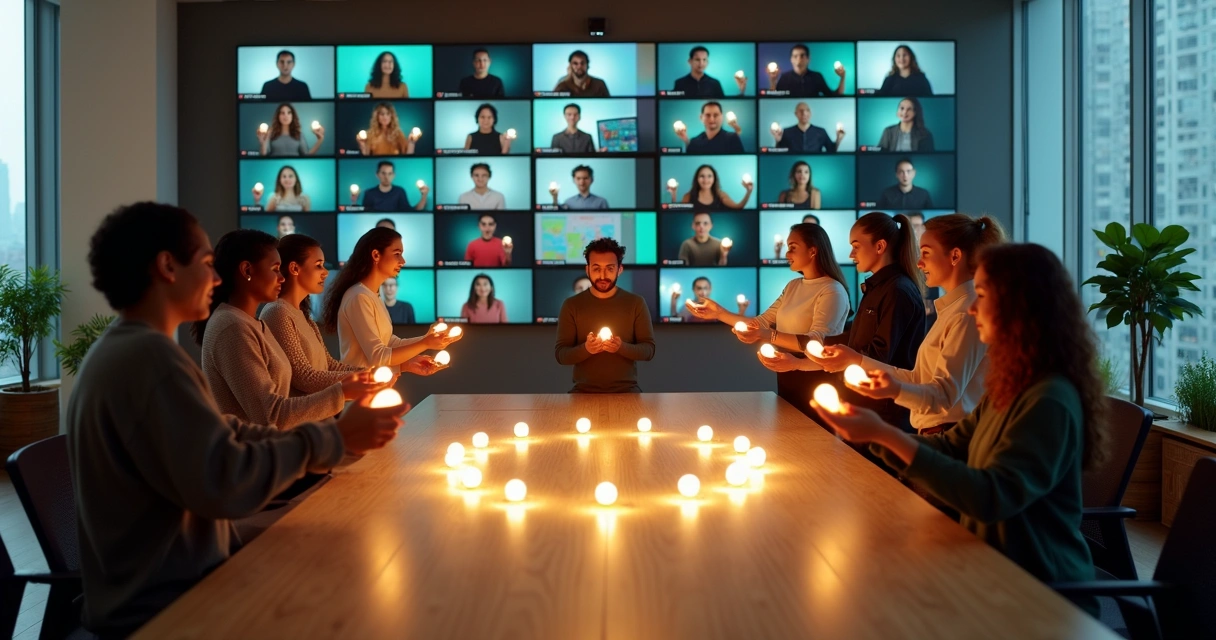
Hybrid work changed where we meet, how we talk, and what team life feels like. Many of us have seen the same pattern. Tasks still move forward, meetings still happen, but something softer starts to fade. People know what to do, yet they do not always feel part of something shared.
That is where group rituals matter. We see rituals as repeated actions with meaning. They are not empty habits. They give rhythm to a team. They tell people, without long speeches, “you belong here.”
In hybrid workspaces, rituals turn scattered presence into shared identity.
This matters now more than ever. According to recent Gallup data on hybrid work, 52% of U.S. employees in remote-capable jobs are in hybrid arrangements, while 26% are fully remote and 22% fully on-site. That means a large part of the workforce now moves between home, office, and digital spaces. We think this shift asks teams to be more intentional about how connection is built.
Why rituals matter when work is split
When people share a physical office every day, belonging can grow through small moments. A greeting at the door. A chat before a meeting. Lunch at the same time. These moments may look small, but they carry social weight.
Hybrid work breaks that automatic flow. Some people are together in person. Others join from a screen. Some join often. Some rarely do. Without shared rituals, teams can start to feel uneven. A few people become insiders by proximity, while others feel like visitors.
We have seen how quickly this happens. One team may have clear goals and smart people, yet still feel cold. Another may have fewer resources, but stronger warmth, trust, and steadiness because they protect simple rituals.
Belonging grows in repetition.
Research supports this. In a study comparing hybrid and on-site employees, adjustment to the work model predicted workplace attachment and belongingness. In simple terms, when people adapt well to the way work is structured, they feel more connected to the workplace. We read this as a strong signal that structure is not only practical. It is emotional too.
What makes a ritual different from a routine?
Not every repeated act is a ritual. A routine helps work happen. A ritual helps meaning happen. Both can happen at the same time, but they are not the same.
For example, a weekly team meeting is a routine if it only covers updates. It becomes a ritual when it also carries a shared tone, a clear opening, and a sense of collective presence.
A group ritual is a repeated shared action that signals identity, care, and continuity.
That meaning does not need to be dramatic. In fact, the best rituals are often simple. They work because people know what to expect and why it exists.
Useful rituals in hybrid teams often include:
A short check-in question at the start of Monday meetings
A shared pause to recognize one team win each week
A monthly remote coffee session with no task agenda
A welcome ritual for every new team member
A closing reflection at the end of a project cycle
Each one says something subtle but strong. We notice each other. We mark time together. We do not only share tasks. We share experience.

How rituals shape emotion and behavior
Rituals do more than create nice moments. They shape how people feel in a group, and that changes behavior over time.
When a ritual is steady, people relax into it. They know there is space to speak. They know they will be seen. They know the group has memory. This lowers social uncertainty, which is one of the hidden drains of hybrid work.
There is also strong evidence on meaning. A multi-study analysis on group rituals at work found that rituals with physical action, communality, and psychological meaning increase job meaningfulness. That stronger sense of meaning then predicts more citizenship behavior, where people contribute beyond the minimum without external reward.
We find this easy to believe. When people feel part of a living group, they give more care to the group. Not because they are forced, but because the bond feels real.
Good rituals often influence teams in three ways:
They reduce distance by giving everyone a shared point of entry.
They create trust through predictable social moments.
They reinforce values by showing what the team repeats on purpose.
Short rituals can have deep effects. A one-minute pause can calm a rushed meeting. A round of appreciation can soften a tense week. A small welcome practice can change how a new person reads the culture from day one.
What good rituals look like in hybrid teams
We think the best rituals are inclusive, light, and clear. They should not feel performative. They should fit the team’s pace and be easy to repeat.
One team we observed started each Thursday with one question: “What helped you most this week?” At first, answers were brief. After a month, people began naming support they received from others. The question stayed the same, but the culture changed. Gratitude became visible. So did mutual reliance.
That is how rituals work. They do not force belonging. They make space for it.
When building rituals for hybrid workspaces, we suggest keeping these points in mind:
Make them accessible for remote and in-person people at the same time
Keep the format simple enough to last
Use timing that feels steady, not random
Give the ritual a human purpose, not just an administrative one
Invite participation, but do not pressure personal disclosure
The best ritual is one people can trust, not one that tries to impress them.
Common mistakes that weaken rituals
Some rituals fail because they are too long. Others fail because they are forced from above without emotional sense. We have also seen rituals break down when office-based staff dominate the moment and remote staff become silent watchers.
That last point matters a lot. In hybrid settings, fairness is felt in very practical ways. Who speaks first. Who gets seen. Who gets invited in. If a ritual repeats exclusion, it does not create belonging. It confirms distance.
There are a few warning signs to watch:
The same people always lead and speak
Remote participants join late or without context
The ritual becomes a task report in disguise
People do it because they must, not because it still means something
When that happens, we think teams should adjust the ritual instead of abandoning the idea. The answer is often not “less ritual.” It is “better ritual.”
How to start without making it awkward
Many leaders worry that rituals will feel artificial. That fear is understandable. We have felt it too. The answer is to begin small and stay honest.
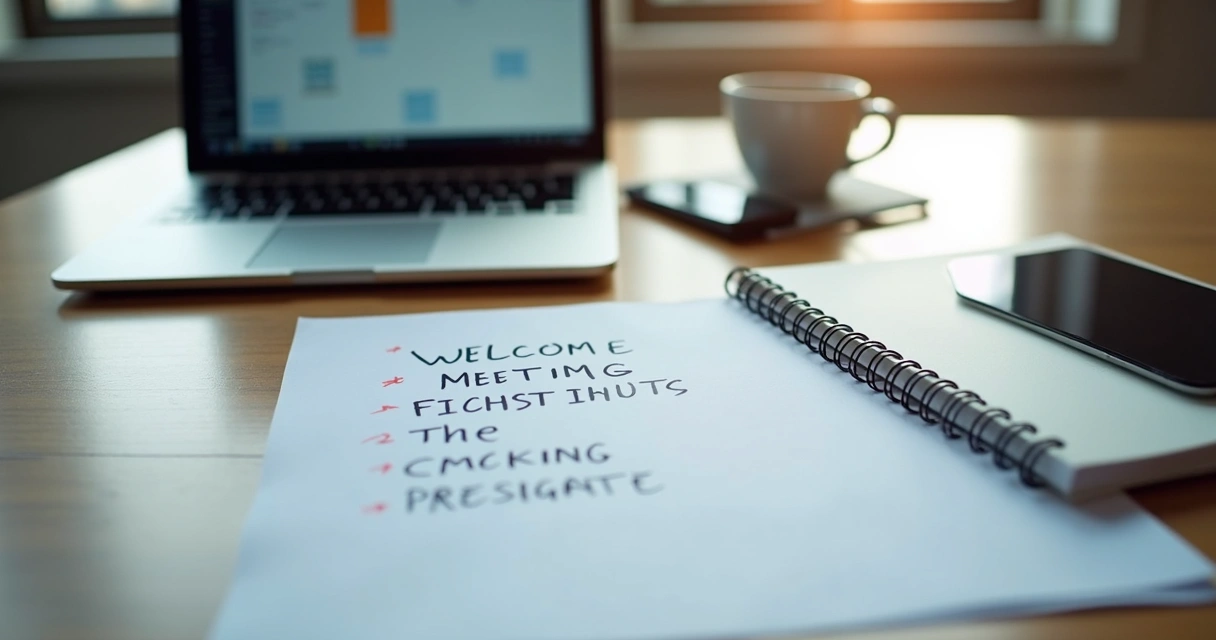
Start with one repeated moment. Keep it short. Explain why it exists. Then watch how people respond over a few weeks.
A simple path can look like this:
Choose one moment that already happens, such as a weekly meeting.
Add one human element, such as a check-in or closing reflection.
Make the format stable for one month.
Ask the team what felt useful and what felt flat.
Refine it without losing the core purpose.
Small beginnings often work best. People do not need grand ceremonies. They need steady signals that they matter to the group.
Conclusion
Hybrid workspaces ask more from culture because less happens by accident. Belonging can no longer depend only on shared walls or casual contact. It must be built through repeated acts that give shape to shared life.
Group rituals do exactly that. They create rhythm, reduce distance, and turn scattered coworkers into a team with memory. We believe that when rituals are thoughtful, simple, and shared fairly, they help people feel grounded in something larger than their task list.
People stay connected to teams that make connection visible.
Frequently asked questions
What are group rituals in hybrid workspaces?
Group rituals in hybrid workspaces are repeated shared practices that help teams feel connected across in-person and remote settings. They can include weekly check-ins, welcome moments for new members, shared reflections, or regular recognition moments.
How do rituals help team belonging?
Rituals help team belonging by giving people a stable social experience. They create shared meaning, reduce uncertainty, and show that each person is part of the group. Over time, this builds trust and a stronger sense of connection.
How to create group rituals remotely?
We suggest starting with one simple repeated moment inside an existing meeting. Keep it short, make sure remote participants can join fully, and explain the purpose clearly. Then repeat it consistently and adjust based on team feedback.
Are group rituals worth it for hybrid teams?
Yes, group rituals are worth it for hybrid teams because they support belonging, shared identity, and a stronger emotional link between team members. In work settings where people are split across places, these shared moments help hold the group together.
What are examples of effective group rituals?
Effective group rituals include Monday check-in questions, monthly remote coffee talks, project closing reflections, team gratitude rounds, and consistent welcome practices for new hires. The best examples are simple, repeatable, and meaningful for both remote and in-person people.